The use of renewable and nonrenewable resources in a manner that satisfies our current needs but does not compromise the future availability of resources
According to the UN, sustainable development “meets the needs of the present without sacrificing the ability of future generations to meet their own needs.”
Globalisation vs Localisation, Principles of Cultural Adaptation
“If you talk to a man in a language he understands, that goes to his head. If you talk to him in his language that goes to his heart.” – Nelson Mandela
It is easier to build trust and understanding when you communicate with someone in their own languages.
Companies that offer multilingual information and customer support manage to increase brand loyalty as their customers know that there is someone who understands them and their needs.
If you’re planning to have additional languages for your website, it’s important that you familiarize yourself with the two concepts of localization and globalization. In this article, we explore the difference between these seemingly similar, yet very different concepts.
What is Localization?
Localization refers to the adjustment of a specific resource or product to fit the demands of one locale. Localizing your materials involves making necessary changes to existing content to ensure that an audience in a targeted locale will understand it. The following are ways to localize your content:
Translate the content
Immigrants to the United States originate from many different language backgrounds and may have different levels of English proficiency. Using data from the 2013 U.S. Census, about half of the total immigrant population consisted of Limited English Proficient (LEP) Individuals. LEP Individuals have limited ability to read, speak, write, or understand the English language.
One way to localize your website content is to translate the information provided, to offer it in your audience’s native language.
A direct translation could lose the original message, so you want to make sure the translation keeps the meaning in tact, with attention to cultural nuances. The localized content should maintain meaning so that it can resonate with the specific target group. This means that your translations should not only be correct linguistically, but they should also reflect the message of the source language accurately.
Use comprehensible formats
Aside from translating content into a language that the local audience can understand, localization also involves using easily comprehensible formats, such as:
Date and time formats
Telephone number formats
System of measurement (imperial or metric)
Currency (symbol and amount)
Keyboard formats used
Punctuations, icons, and symbols
Image and text content sensitivities
Keyboard formats used
Use appropriate visual design elements
In addition to capturing the above elements, localization requires an appropriate visual design that makes sense to the target audience. When creating content for your website, you should incorporate visual design elements that improve user experiences. For instance, you should consider the effects of photography, layouts, illustrations, color, and space on your website. The appropriate visual design elements to use may vary from one target audience to another.
You should note that localizing content isn’t just about using understandable formats, comprehensible visual elements, and translating the existing content to the audience’s native language. It’s also about creating content that maintains its intended message when reaching different audiences.
What is Globalization?
Globalization is the adaptation of a specific resource to fit the demands of multiple cultures. In other words, globalization is the development of a product that is easily accepted worldwide. A globalized website, therefore, should:
Support multiple languages
Just like localization, there is an element of language translation in globalization. However, there is a difference between how you translate content for localization and how you translate content for globalization. For localization, you translate the existing content to a language that your specific target audience understands. For globalization, however, you translate the existing content into multiple languages to make it accessible to multiple target audiences.
Offer content in a variety of formats and designs
When globalizing your content, you should also consider all audience groups by integrating elements of style and design that appeal to each one of them. This is because the way users scan a web page varies depending on their country of origin.
For instance, western users typically read from left to right, while users from East Asian and Middle East countries read from right to left. Also, offer content in a variety of digital formats, print mediums, and file types. Globalization often involves code that allows a website to be more flexible and universal for different formats. Globalizing your website content will go a long way in ensuring that your website will provide a user-friendly experience to all users.
When globalizing your website content, your goal should be to provide a unified and coherent global experience. When designing your website, you should not only maintain consistency, but you should also maintain compliance with global standards.
Localization vs. Globalization in a Nutshell
Localization is the adaptation of a resource or product to fit the demands of one specific culture or locale, while globalization is the adaption of a particular resource to fit the demands of multiple cultures and locales.
Localization makes a resource accessible to an audience of a specific locale, while globalization makes a resource accessible by people from different cultures and locales.
Localization conveys value to a specific audience, while globalization makes a resource acceptable by people from different cultures and locales.
Final Thoughts
Customers feel more comfortable when content, services, and products are tailored to their unique personal needs, their market, and their cultural environment. Through localization and globalization, companies can reach their target markets in a customized fashion and gain a competitive advantage.
The important thing to remember when adopting either of the two concepts is to keep content across all languages as accurate and up-to-date as possible so that communication with all users is consistent. If you are in the public sector, and wondering if this applies to you, the short answer is yes. You have to adapt content to meet the needs of LEP individuals as well as the global community.
What is Localization?
Localization refers to the adaptation of a specific website, resource or product. In simpler terms, it is the process of translating content to fit the demands of one locale.
Localizing content is not a limited act. It’s not simply translating the existing language to a market’s native language.
keep the original’s intent and make it fit with local customs. In many situations, there’s no use to translated content if it doesn’t reflect the original intention.
With localization, content needs to meet the locale’s acceptable cultural norms and talk straight to the target market. It’s a more complex version of the translation, adding other nuances into the mix.
For example, localization includes formats and expected usage norms. This can include:
Numbers, date and time formats
Currency types used
Keyboard formats used
Symbols, icons, and punctuations
Text and image content sensitivities
Different legalities on locale
Localization requires a proper visual design that makes sense to the target market. This may differ from market to market. What’s crucial, however, is the “fit.”
You need to have content that fits the total values of the market you are targeting. In essence, you make it into something that a different market would appreciate because it fits into the cultural context of the area you’re targeting.
What is Globalization?
Globalization is the flipside of localization. Often referred to as internationalization it’s the process of making a product or content multilingual.
You’re setting the business, product or offering to a standard that is more easily accepted worldwide. When it comes to a website, globalization strips code relating to specific languages.
This process entails a few things. First, globalization processes anything that acts as a barrier to global development. Any code, language norms or legacy encoding receive standardization.
Globalization also helps add markups. This will allow for more natural translation in the future.
However, the code should be able to support any future localization efforts as well. For example, an international standard website will have certain features. These include making date-time formatting easier to change. It will support localized calendars, number formats and the like but may not have them immediately enabled.
A globalized product or website should support multiple languages. Localization elements will be separated from the source code.
Loading of local content happens upon request of a user. A default product will be “generic” and can be used more readily for different cultures although they will not speak to differing cultural norms out of the gate.
The Pros and Cons of Globalization and Localization
So which concept is right for you? This depends on the intent of the business.
Globalization is useful for products and businesses looking to delve into other markets. Setting an international standard for themselves through a competent translation team helps. This will make future localization efforts quicker and more easily accessible.
What globalization removes, however, is the “local flavor.” Making a product acceptable to many countries and cultures is problematic.
You cannot add a specific style that entices a particular locale. This creates a disadvantage when you need to penetrate a certain target market.
Conversely, localization gives you a way to appeal better to your specific target market. Target markets like direct communication and people are more likely to engage something specifically directed at them.
Localization, however, limits your value to any other market than the locale. For local businesses, this is not a problem. International business may need to be a little more wary. This will hamper your ability to show your product’s wider marketability.
If people know that the content has traces of marketing not targeted to them, it is harder to convince them to convert. This is why globalization requires “scrubbing” the code of anything that looks local.
Which One Do I Choose?
Not sure which to go with? It’s a question of market focus when it comes to business-level translation.
If you are a local business, here’s a tip. The answer to choosing between globalization and localization is the latter. No question about it. If you are a global business, however, it is much more complicated.
It’s crucial to have a globalized product, website or content that will act as the prime reference. This globalized version will be the source of all your localization efforts.
Once you finish the globalization of your business, you would want to move towards localization efforts. Adapt localization according to your target markets. What is the scope of your localization and its timeline for your business? It depends on your approach.
Localization efforts are valuable only if your target market will care. As an example, there’s no point in translating for a Chinese locale if you don’t have a Chinese audience. It’s vital to decide if catching a particular audience is worth the work.
If you think it is, go for localization. Even then, it’s crucial to start with a robust and globalized foundation.
In either situation, it’s useful to have a translation and localization team that can do both.
Some Closing Thoughts
English is not everyone’s language of choice. The question of globalization vs localization is less a matter of choosing one over the other as it is a matter of fulfilling your needs.
If you are going for a specific locale, localization is the key. If you are planning to go global, start globalizing. Localize only when you get the local audience that is worth translating for.
Are you looking for a team who can translate, localize and globalize for you?
Once you’ve analyzed your audience, how do you use this information? How do you keep from writing something that may potentially still be incomprehensible or useless to your readers? Draft your document with your audience’s needs in mind, but remember that writing can be refined over many drafts. With each subsequent draft, think more carefully about your readers, and revise and edit your document so that you make technical information more understandable for nonspecialist audiences. The lists below are some of the ways you can adapt your writing to your audience’s needs.
The following “controls” have mostly to do with making technical information more understandable for nonspecialist audiences, and they refer to information you will refine as you begin to put your final report together. However, it is a good idea to be aware of your audience’s needs even in the early stages of your report drafting.
PROVIDE THE RIGHT INFORMATION
Add information readers need to understand your document. Check to see whether certain key information is missing—for example, a critical series of steps from a set of instructions; important background that helps beginners understand the main discussion; definition of key terms.
Omit information your readers do not need. Unnecessary information can also confuse and frustrate readers—after all, it’s there so they feel obligated to read it. For example, you can probably chop theoretical discussion from basic instructions.
Change the level of the information you currently have. You may have the right information but it may be “pitched” at too high or too low a technical level. It may be pitched at the wrong kind of audience—for example, at an expert audience rather than a technician audience. This happens most often when product-design notes are passed off as instructions.
Add examples to help readers understand. Examples are one of the most powerful ways to connect with audiences, particularly in instructions. Even in a non-instructional text, for example, when you are trying to explain a technical concept, examples are a major help—analogies in particular.
Change the level of your examples. You may be using examples but the technical content or level may not be appropriate to your readers. Homespun examples may not be useful to experts; highly technical ones may totally miss your nonspecialist readers.
GUIDE YOUR READER THROUGH YOUR WRITING
Change the organization of your information. Sometimes, you can have all the right information but arrange it in the wrong way. For example, there can be too much background information up front (or too little) such that certain readers get lost. Sometimes, background information needs to be consolidated into the main information—for example, in instructions it’s sometimes better to feed in chunks of background at the points where they are immediately needed.
Strengthen transitions. It may be difficult for readers, particularly nonspecialists, to see the connections between the main sections of your report, between individual paragraphs, and sometimes even between individual sentences. You can make these connections much clearer by adding transition words and by echoing key words more accurately. Words like “therefore,” “for example,” “however” are transition words—they indicate the logic connecting the previous thought to the upcoming thought. You can also strengthen transitions by carefully echoing the same key words. A report describing new software for architects might use the word software several times on the same page or even in the same paragraph. In technical prose, it’s not a good idea to vary word choice—use the same words so that people don’t get any more confused than they may already be.
Write stronger introductions—both for the whole document and for major sections. People seem to read with more confidence and understanding when they have the “big picture”—a view of what’s coming, and how it relates to what they’ve just read. Therefore, write a strong introduction to the entire document—one that makes clear the topic, purpose, audience, and contents of that document. And for each major section within your document, use mini-introductions that indicate at least the topic of the section and give an overview of the subtopics to be covered in that section.
Create topic sentences for paragraphs and paragraph groups. It can help readers immensely to give them an idea of the topic and purpose of a section (a group of paragraphs) and in particular to give them an overview of the subtopics about to be covered. Road maps help when you’re in a different state!
CRAFT EFFECTIVE SENTENCES
Change sentence style and length. How you write—down at the individual sentence level—can make a big difference too. In instructions, for example, using imperative voice and “you” phrasing is vastly more understandable than the passive voice or third-personal phrasing. For some reason, personalizing your writing style and making it more relaxed and informal can make it more accessible and understandable. Passive, person-less writing is harder to read—put people and action in your writing. Similarly, go for active verbs as opposed to be verb phrasing. All of this makes your writing more direct and immediate—readers don’t have to dig for it. And obviously, sentence length matters as well. An average of somewhere between 15 and 25 words per sentence is about right; sentences over 30 words are to be mistrusted.
Edit for sentence clarity and economy. This is closely related to the previous “control” but deserves its own spot. Often, writing style can be so wordy that it is hard or frustrating to read. When you revise your rough drafts, put them on a diet—go through a draft line by line trying to reduce the overall word, page, or line count by 20 percent. Try it as an experiment and see how you do. You’ll find a lot of fussy, unnecessary detail and inflated phrasing you can chop out.
MAKE YOUR DOCUMENT VISUALLY APPEALING
Add and vary graphics. For nonspecialist audiences, you may want to use more graphics—and simpler ones at that. Graphics for specialists are more detailed, more technical. In technical documents for nonspecialists, there also tend to be more “decorative” graphics—ones that are attractive but serve no strict informative or persuasive purpose at all.
Break text up or consolidate text into meaningful, usable chunks. For nonspecialist readers, you may need to have shorter paragraphs. Maybe a 6- to 8-line paragraph is the usual maximum. Notice how much longer paragraphs are in technical documents written for specialists.
Add cross-references to important information. In technical information, you can help nonspecialist readers by pointing them to background sources. If you can’t fully explain a topic on the spot, point to a section or chapter where it is.
Use headings and lists. Readers can be intimidated by big dense paragraphs of writing, uncut by anything other than a blank line now and then. Search your rough drafts for ways to incorporate headings—look for changes in topic or subtopic. Search your writing for listings of things—these can be made into vertical lists. Look for paired listings such as terms and their definitions—these can be made into two-column lists. Of course, be careful not to force this special formatting, and don’t overdo it.
Use special typography, and work with margins, line length, line spacing, type size, and type style. For nonspecialist readers, you can do things like making the lines shorter (bringing in the margins), using larger type sizes, and other such tactics. Typically, sans-serif fonts, such as Ariel, are useful for online readers. Serif fonts, such as Time New Roman, are useful for print texts.
By now you should be able to see that many of the decisions you make as a technical writer depend on who will read your report. From content, to language, to layout, every aspect of your communication must keep your readers’ needs in mind.
We will spend time later in this book expanding our discussion of audience as well as document design–an important consideration that can help tremendously in making your document professional and easy to read.
Blogger-Akash Shinde (Assistant Director)
Student of Journalism and Mass Communication.
INTERVIEWER CHECKLIST
- Appearance – overall grooming, dress, posture,
and appropriateness - Sociability – overall warmth and friendliness
- Handshake – firm and confident
- Eye contact – ability to look directly at you
during interview - Composure – overall confidence in responding to
questions - Conversation – ability to speak clearly, using
proper language, grammar, and tone - Responses – the questions were answered honestly,
seriously, and completely, ability to “sell” him/herself
with appropriate responses - Courtesy – ability to show respect and interest
- Job application – neatly written and complete
- Resume – clear, concise, positive, typed,
technically correct - Interviewer comments:
Akash Shinde
QUESTIONS YOU CAN ASK DURING THEINTERVIEW
At the end of a job interview, the interviewer may ask,
“Do you have any questions?” The interviewer will expect
you to have intelligent, well-thought-out questions that
indicate you have some knowledge of the job for which
you are applying. Also, it reveals how well you listened
to the interviewer. Do your research and ask appropriate
questions. Here are some examples.
Would you describe the duties I would be performing?
What would be the time frame for filling this position?
If hired, who will be my supervisor?
How would I be trained or introduced to the job?
With whom would I be working with and what are their
duties?
How would my performance be evaluated? Who would
evaluate me and when?
Can someone in this position be promoted? If so, to what
position?
Of your most successful employees, what characteristics
do they possess that helped them to be successful?
What is the customer service philosophy of your
company?
What is the best part about working here?
Akash Shinde
COMMON INTERVIEW QUESTIONS
The following are sample questions that are typically asked
of interviewees. Some questions are designed to get
specific details while other questions are designed to get a
feel for your personality and character. It is a great idea to
decide how you would answer these questions beforehand.
Tell me about yourself.
What are your favorite classes? What are your least
favorite classes? Why?
What qualifications do you possess to work in this position?
Do you enjoy working in a group or independently?
What are your goals for the next five years?
In what school activities have you participated? Which do
you enjoy most?
Do you participate in after-school activities? If so,
describe them.
What motivates you?
What are your greatest strengths? What are your biggest
challenges?
What do you think it takes to be successful in your work?
What kind of projects, events, or assignments interest and
excite you?
Give me an example of a time when you had to apply
good judgment in a challenging situation.
Tell me about your current (or last) job. What are the
reasons you are leaving (or left)?
Why do you want to work for _?
Why do you think you are a good fit for this position?
How has your high school experience prepared you for
work?
What are the most important rewards you expect in your
career/life?
How do you work under pressure? Please give me an
example of a time when you had to work under pressure
and explain how you handled the situation.
How do you think a friend or teacher who knows you well
would describe you?
What would I see if I went to your Facebook page and how
might it influence my decision to hire you?
What two or three accomplishments have given you the
most satisfactions? Why?
If you were interviewing a candidate for a position, what
qualities do you believe he or she must have in order to be
selected?
When you have free time, how do you spend it?
What is one thing about yourself that you would most like
to change?
What are your salary requirements?
Give me an example of something you had to learn that
was difficult.
Do you have any questions for me? (*Your answer should
always be “yes” and followed up with your questions!)
Akash Shinde
Use of basic principle of writing?
Idiomatic Construction
Culture-free, one-size-fits-all English is usually the most efficient way to speak to a large, heterogeneous audience of E2s. In contrast, there are times when our English materials are intended for E2s in a small number of specific countries.
In these cases, it might make good business sense to produce more than one English version, sensitive to the first language of the readers. Often English gives us a choice of idioms and, therefore, the option to choose an idiom that is close to the idiomatic structure of E2’s first language.
For example, suppose the original text in a software manual read: There is a way to save several passages at once to the Clipboard. An E2 whose first language is Hindi would probably prefer: One can save several passages at once in the Clipboard. like In contrast, an E2 whose first language is any other Indian dialect might prefer: It is possible to save several passages at once in the Clipboard.
But the application in which it makes most sense is a document containing instructions, in which the same sentence pattern may occur scores of times.
Just as most American readers would be irritated by an instruction manual written entirely in the third person-The customer should type his or her Personal Identification Number.
Many American writers think that the second person version of the instruction-Type your Personal Identification Number is far better-leaner, clearer, easier to read.
Akash Shinde
What is Technical Writing
Technical Writing, sometimes called business writing, is writing for a specific purpose and with a specific goal. Usually its goal is to inform / instruct or persuade / argue. Technical writing can really be considered transactional writing because there are two people or groups involved in the communication. One party has a clear goal to inform or persuade the other party. This is real-world writing in every sense. You may not be aware of how much it already impacts your world through textbooks, instructions, web sites, and communications from many businesses and service organizations. There are professional technical communicators but only large organizations have them and even then they are not there to do your daily work for you and that is why it is so helpful for many to take at least an introductory technical writing class.
Why is Technical Writing Important
Why is technical communication important and what will you use it for? Actually, technical writing will be used by most college graduates as a regular part of their work. It is much more likely that you will use technical writing than either academic or creative writing unless you specifically enter those fields. A few examples of why you will likely need these skills include: getting a job – preparing a resume or curriculum vitae, cover letter, application, and portfolio; doing your job – preparing memos, letters, reports, instructions, case reports, reviews, assignments, descriptions, etc.; and keeping your job – communicating with management, co-workers, peers, patients/students/public.
What separates technical communication from other forms of writing?
Technical communication has a specific audience and is purposeful, usually intended to solve a problem for that audience. One area that really sets technical communication apart is that it is quite often collaborative. Technical communication is also focused on readability issues, not only the use of clear writing, but also page design and graphics. The excellence of technical writing is judged by clarity, accuracy, comprehensiveness, accessibility, conciseness, professional appearance, and correctness.
There are seven principles to guide technical writing: remember your purpose (to inform or persuade), remember your audience (their concerns, background, attitude toward your purpose), make your content specific to its purpose and audience, write clearly and precisely (active voice, appropriate language to audience), make good use of visuals (good page design and graphics), and be ethical (truthful, full disclosure, no plagiarizing).
Technical communication serves both explicit, or clear, and implicit, or implied, purposes. Explicit purposes include to provide information, to provide instructions, to persuade the reader to act upon the information, or to enact or prohibit something. Implicit purposes include establishing a relationship, creating trust, establishing credibility, and documenting actions. Most technical communications are based on a problem statement which gives your document a clearly stated objective for your benefit as well as your reader’s. The problem statement defines the problem, by doing more than simply stating your topic, it goes on to explain what about that topic is at issue. For example, if your topic is career guidance then your problem could be the fact that many adults need help identifying a career that suits their strengths and abilities and the solution that your document will present is to create a comprehensive clearing house that helps people identify career paths through military, vocational training, and higher education.
महाराष्ट्राला लागणार लवकरचं झटका….
शीर्षक वाचून जरा चक्रावला असाल ना…पण लवकरच शीर्षकाचा उलगडा होईल. ही बातमी आहे माण-खटाव मध्ये होत असलेल्या नव्या चित्रपटाविषयीची.
करोना अनलॉकनंतर हळूहळू सगळ्या गोष्टी स्थिरावताना दिसत असताना कोरोनाच्या नियमांचे पालन करत अखिल भारतीय चित्रपट महामंडळ नोंदणीकृत असलेल्या मयुरी रणदिवे फिल्म प्रोड्युकॅशन निर्मित * झटका* एक आस या नवीन येत असलेल्या मराठी चित्रपट चित्रीकरकणाचा शुभारंभ दि.१७ मार्च रोजी औंध ता.खटाव या ठिकाणी संपन्न झाला.
सदर चित्रपटातून ग्रामीण प्रेमकथेची शैली झटका एक आस या चित्रपटाच्या माध्यमातून पूर्ण महाराष्ट्रातील जनतेला अनुभवता येणार आहे. पूर्ण महाराष्ट्रातील जनतेला अभिमान आणि हेवा वाटेल की माण खटाव सारख्या दुष्काळी भागातही चित्रपटचे चित्रीकरण होऊ शकतं ही बाब नक्कीच माण खटावसाठी प्रेरणादायी आणि कैतुकास्पदय आहे.
विशेष म्हणजे माण-खटावमधील खेड्यातील मुलामुलींना या चित्रपटामध्ये अभिनय करण्याची संधी देण्यात आली आहे.
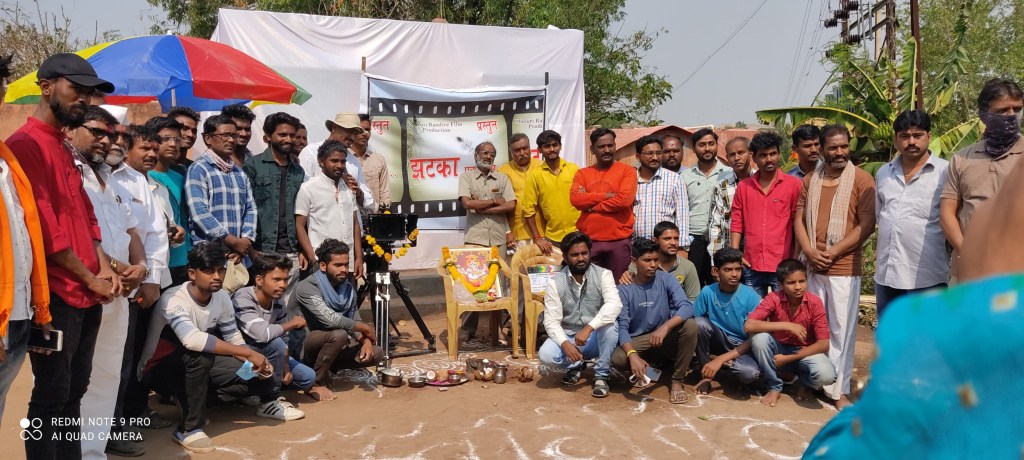
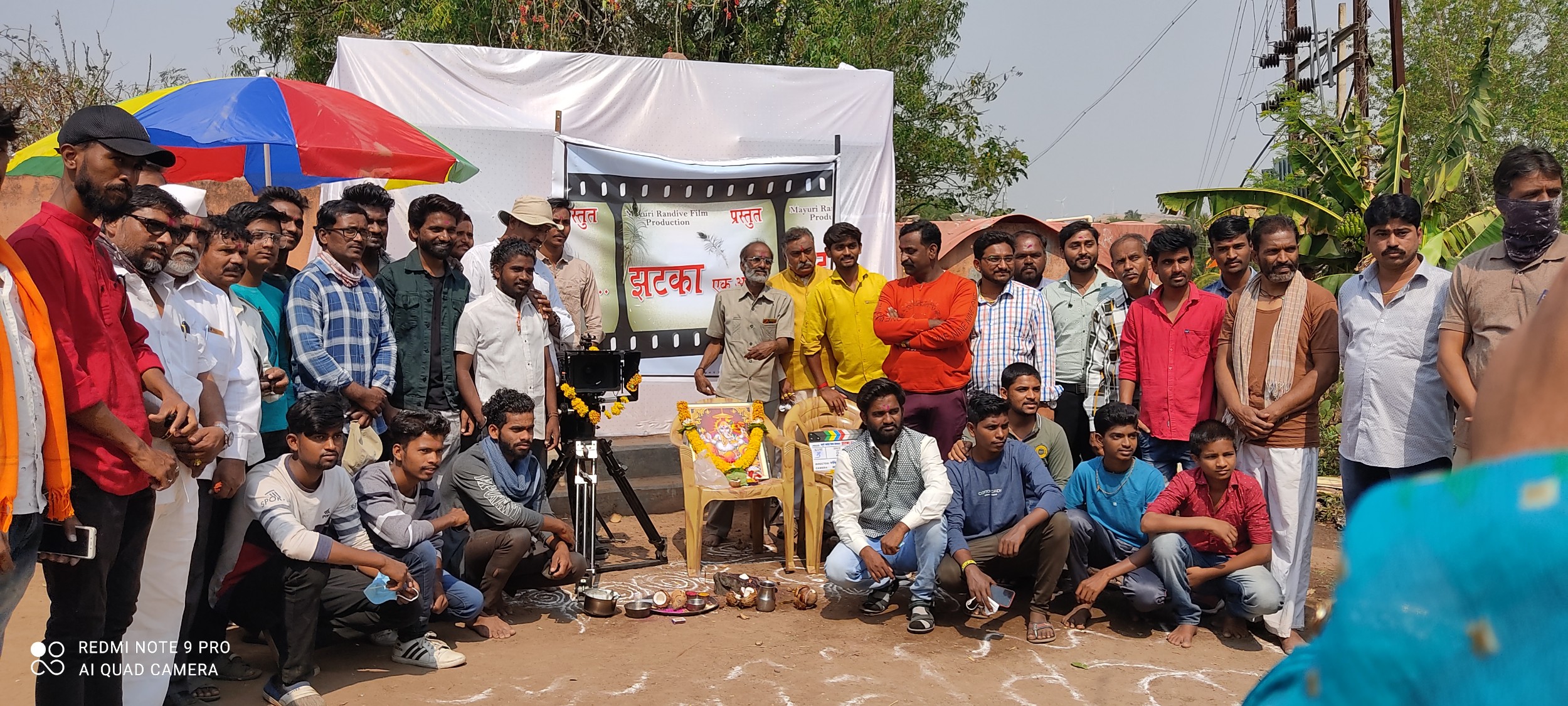
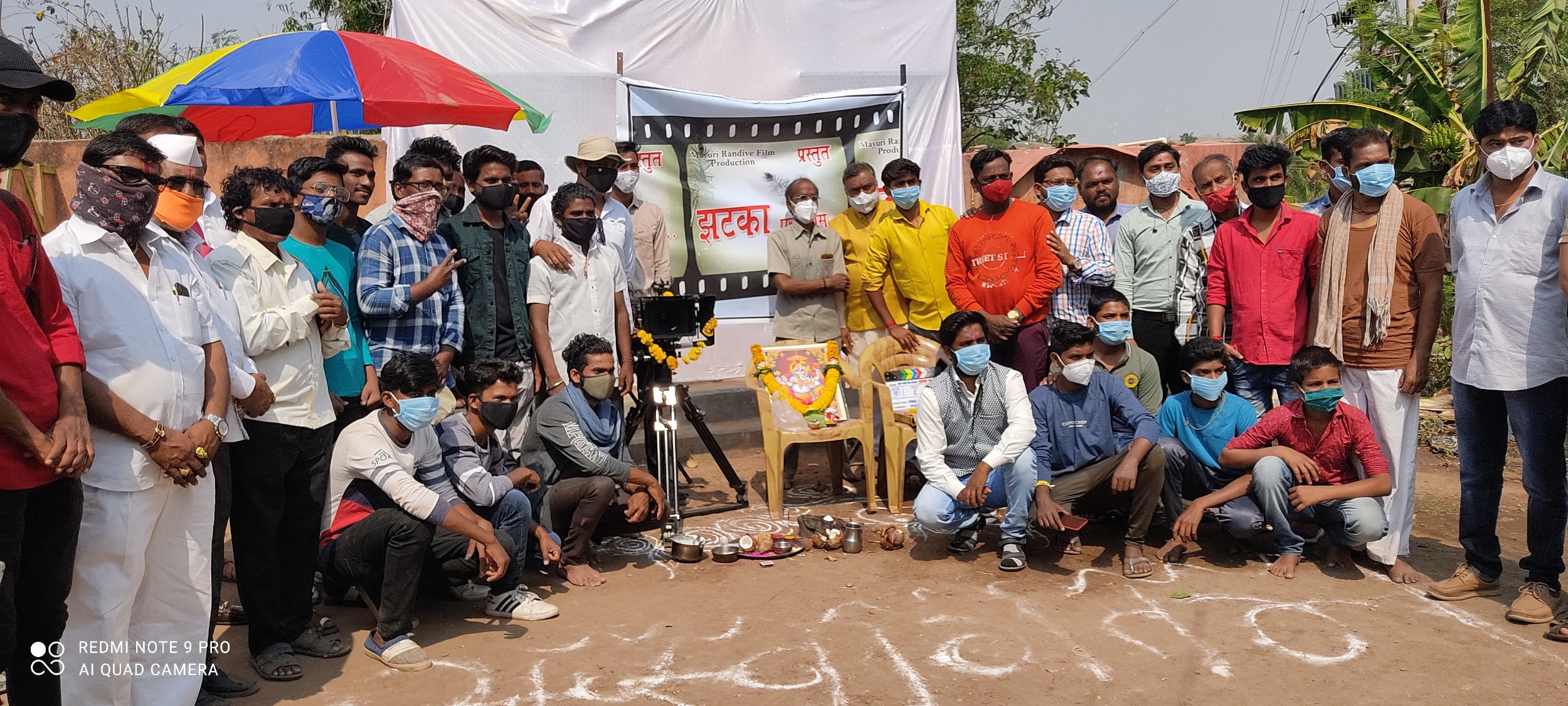
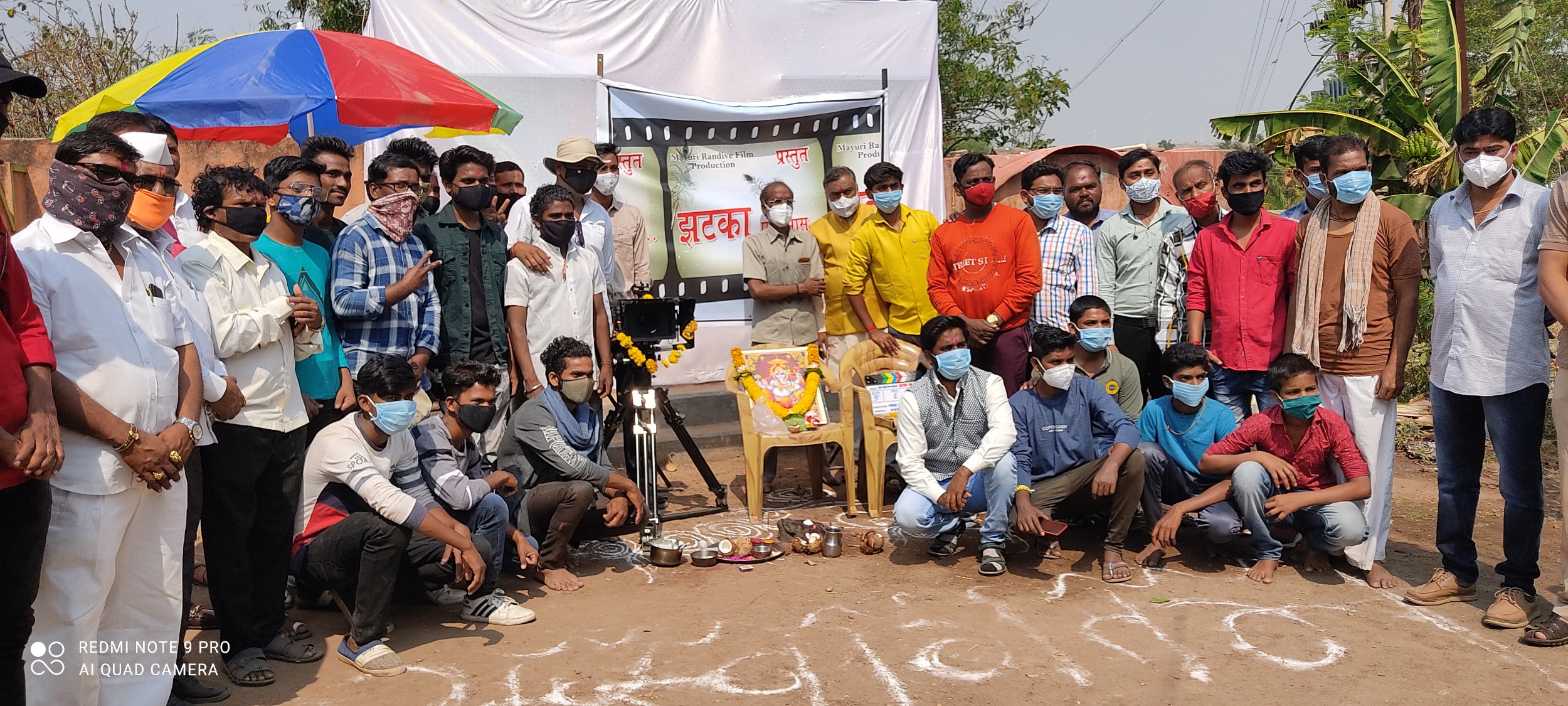

झटका एक आस.. या चित्रपटाचे चित्रीकरण शुभारंभ प्रसिध्द निर्माते महेश देशपांडे यांच्या उपस्थितीत झाला आहे. यावेळी मराठी चित्रपट सृष्टीतले अनेक दिग्गज,नावारूपाला येत असलेले उदयोन्मुख कलाकार आणि फिल्ममेकर उपस्थित राहिले होते.
मयुरी रणदिवे फिल्म प्रोड्युकॅशन प्रस्तुत ‘झटका एक आस’ या चित्रपटाचे दिग्दर्शक-रवींद्र दहातोंडे, निर्माता- सुनिता रणदिवे,भूषण माळी, विकास बोटे,कार्यकारी निर्माता – मेहबूब मुल्ला,सहायक दिग्दर्शक- आकाश रायचंद शिंदे,सुशील अवघडे, श्रध्दा गायकवाड, डिओपी प्रिन्स प्रोडक्शन अमरावतीचे अनुप गजानन वाकोडे,संगीत दिग्दर्शक राहुल नामदास, हमीद नदाफ रंगभूषा- रणजित सूर्यवंशी, छायाचित्रणकार- पंकज काशिद, वेशभूषा व्यवस्थापक अजय नलवडे,सागर बुधावले, आदी दिग्गज मान्यवर उपस्थित राहणार आहेत.
-सहाय्यक दिग्दर्शक-आकाश रायचंद शिंदे
How to create a shooting schedule of overall day in Filmmaking Process.
Step-1-Import Screenplay on stripboard software.
Step-2-Assign characters to scene.
Step-3-Assign shooting location.
Step-4-Add notes with Banners.
Steps-5-Re-Ordering scans.
Step-6-Add Day breaks.
Steps-7-Add meal breakfast and lunch and company Moving.
Step-8-Get Permission Proof and other Proof and make Adjustments.
Step-9-Make PDF format and also share to everyone who is Teams.
Step-10-Include the daily Schedule on call sheets.
Blogger-Akash Shinde {Assistant Director}
Student of Journalism and Mass Communication.
The Aesthetics of Japanese Cinema
- The Tradition of the Aesthetic Consciousness in Japan
In this paper, I will investigate the tradition of the aesthetic consciousness in Japan substituting the aesthetic consciousness or the thought and expression of beauty for the term of aesthetics. The reason is that Japanese traditional consciousness of beauty is included in the films, a product of modern society, in various ways.
The aesthetic consciousness in Japan may be expressed by the two ways as follows; one is shown through works of art and the other is revealed in ways of living and of thinking or living itself. Both have been changing with the tendency of the times, but it is needless to say that the old taste doesnユt disappear but mingles and permeates into new one to flow deeply in the consciousness of people. Also, it is obvious that the origin of the Japanese culture itself has been influenced by other nations in Asia, especially, China and Korea, because it has been blended and stored with a variety of different races and cultures. Then, let’s examine some main concepts related to the aesthetic consciousness in Japan.
There was an excellent opinion on the theory of poetry and of Noh drama in Japanese medieval times (12C – 16C) which is called Yosei and Yugen. Yosei means an emotion or a mood created beyond words. Such a thought of poetry Is very interesting, in that a great value is put on something beyond words although poetry is a genre of arts to be expressed in words. Yugen has the same meaning. It designates misty profound and subtle sentiments, and elegant and mild motions or beauty. Yugen is a temn of philosophy, thought Buddhism which was introduced from China, but has changed to be concept of traditional Japanese beauty.
Beauty of Yosei and Yugen can be replaced with the term of Sabi, which means a timeworn mood or loneliness to be common in Arabi (a desolate look), Sabi (an antique look) and so on.
In modern times (17C-18C), there were the words of Wabi Karumi and Mono no Aware (an awareness of the transience of everything worldly) in the theory of Sado (the tea ceremony), Haiku and literature. Wabi was concerned with a tranquil and plain flavor. Karumi, meaning lightness, is the simplicity shown in the supreme stage, which is opposite to boastful gravity or complicate skills. Mono no Aware is a feeling caused from the change of seasons, an intensive interest evoked by music or love, or an eagerness for things in the work. Besides, there is a tradition that makes much of leaving some spaces in a drawing paper in the theory of painting.
Considering these facts, it can be said that a suppressed expression or non-expressed expression is regarded as the best that reaches to the nothingness in the aesthetic conscious of Japanese people. Indeed, it may be connected to the Zen. Meanwhile, there is an expression which takes on full decorative property (e.g : the gold foil of some temples, Buddhist sanctums, mansions, ‘ etc.).
Now, Iet’s examine the aesthetic consciousness concerned with the ways of living and of thinking or living itself. Japanese is the agricultural nation, but there were some groups of wandering and roaming people such as lots of artists who led a vagabond life for their whole life, peddlers, aesthetics, etc.. Here, the theme of a wayfaring way or Michiyuki (a trip to the death) often repeats in Japanese films. The idea of transience produces the view of life and death accepting death, as a routine. The aesthetic consciousness to death is represented as Shinju (a lave suicide) that is characterized in the tragedy of Kabuki or Joruri. Also, there were the view of life and death of Yakuza, who thought of keeping an obligation to the last as a morality, and of warriors (Bushido) who considered a loyalty and a submission to be one. All of these beautify the attitude of accepting death as trivial.
If it is the aesthetics of the positive and that of victory to keep a life, we can say that the aesthetics of Japanese is related to that of the negative or a ruin. It is not simply defeat but ruin based on some righteousness. Such an aesthetic consciousness was visually stylized in Yakuza films which was popular in the 1960’s.
In the other side, there were the traditions of Kabuki and paintings which showed a ferocious fancy, a ghost story and even bizarreness, Rakugo, a story-telling skill of traditional laugh, and shameless laugh, humor and satire shown in popular literature or
paintings, contrary to the aesthetic consciousness concerned with elegance, Yugen, transience death. These traditions have something to do with optimism and realism, which choose grotesqueness rather than elegance and persistence rather than transience. Therefore, it can be called an anti-aesthetic consciousness, in that I satirizes the above-mentioned traditional aesthetic consciousness and violently upsets it. Such a strong anti-aesthetic consciousness is well exhibited in a director Shohei Imamura’s works.
- The Expression of the Aesthetic Consciousness in Japanese Films – Suppression and Excess
Japanese films had been rapidly mass-produced after 1923, and then finally reached to its summit in the 1950’s. In the 1920’s (the silent picture days), Japan had already achieved a big film country following America in terms of quantity. But it did not get internationality
because of the shortage of ability in terms of quality.
In those days, the characteristic of Japanese films was that, first of all, various tastes of directors could be engaged in making a film because lots of directors were needed for the mass production of films. Second. Japanese cinema developed its own distinctive features in theme, genre, aesthetic consciousness and the method of expression because it did not have international markets. Besides, there was great influence from European films.
In other words, the traditional aesthetic consciousness of Japan was influenced as immensely by Europe as by many Asian countries including China and Korea. Generally speaking, if you could pick up two of the specific characters of Japanese films among others, they might be suppression and excess. While suppression means to press down expression, not ex-press (push outside) but in-press (pushed inside). That is to say, it is to control and make calm not to express some desires or feelings, and not to explode. Excess means to push fervently an expression toward outside, namely, to express some desires or feeling, and to go off. Yasujiro Ozu is regarded as the representative of
suppression films.
There are a tension between inactivity and activity, a vivid contrast of light and shadow, and the dynamics of motion in Akira Kurosawaユs works. In his films, there are some excess of expression and the emotion of energy like heavy rain, gale, the burning sun, etc. Such excess which intensely pushes ego toward the outside is explicit in visuals as well as actions, and it can make itself understood internationally. Thatユs why his films get a good reputation widely in the world. Also, his works have the excess of a view of morality of enforcing humanism as well as that of expression, and make spectators embarrassed or moved. The excess as the expression of the manhood may appeal to less female than male. Mr. Donald Riche, well known for his introduction of Japanese films to foreign countries, has praised for Red Sorghum, a Chinese film, on the ground that it reminds Rashomon. Ahang Yimou’s Rod Sorghum has a heroin but depicts not so much the expression of the womanhood as that of a strong ego and self-assertion. And in his other works, the excess and vividness of color can be well observed, too.
Kurosawa’s noticeable features can imply the following. He began as a painter and was interested in Japanese traditional artistic accomplishment like Noh drama, which greatly influenced the beauty of style of his works. Both Nohユs restrained expression and Kurosawa’s excessive one do not contradict, but are related with each other in a dynamic tension within his films to complete his unique and consistent features under his aesthetic consciousness.
Director Shohei Imamura is same in the light of ‘excess’, even though his works display the traits of more ‘suppression’ than ‘excess’ as shown in Woonagi (The Eel) and Black Rain. But his works can be distinguished from Akira Kurosawaユs ones, if same in excess, in that the former works contain the spirit and consciousness of an intensive anti-aesthetic. He expresses the power of life, straightforward desired and trivial comedy of worldly human beings with some distance, rather than the beauty of an image or a composition. From this distance, there is created a laugh which is not ridicule but sympathy with common people. It seems that Imamura’s true characteristic is an endless interest in a falling man and popularity going through his works with something secular. Meanwhile, the works of Takeshi Kitano, who directed HANA-BI, are the films of suppression in general. Except A Scent At The Sea(91), ids Return(96), some unexpected violence are hidden in his works. HANA-BI has a man of few words and suppressed dialogues, but hidden violence take on a sudden and excessive property in it. This excess make spectators shocked. Be it ever so physical and bodily violence, this is something to be felt an airs of nihilism and pessimism which come out of the fissure of his existence, and to transcend beyond words, reason and logic.
Characters who are similar with the hero of HANA-BI distinguished in Japanese films to win a prize in international film festivals, for example, Kohei Oguri’s Nemura Otoko(Sleeping Man), in which Ahn Sung-ki, a famous Korean actor, appears, Hirokazu Koreeda’ Light of Fantasy, Naomi Kawase’s Moeno Suzaku, Makoto Shinozaki’s Okaeri and so on.
In fact, the expression of ‘suppression’ can be found in many films all over the world, too. A Taiwan film A City of Sadness and an Indian film Song of the Road are good examples. And in Korean films, director Im Kwon-taek’s works Jokbo(The Family Tree Book), Sibaji(A Surrogate Woman), Sopyunje, etc. can be counted in. But strong pathos is fully contained in his works.
As a result, both ‘excess’ and ‘supression’ may be excessive elements of all nations only in terms of an abstract meaning. The points are whether such expressions are unusually much involved in Japanese films and whether they include the characteristics peculiar to Japan.
3. The Expression of the Aesthetic Consciousness in Japanese Films – Death and Revival
Since the days of mass-production(from the 1920’s through the 1960’s), Japanese films have achieved to group various genres of films, regardless of good works by outstanding directors. Among the various genres, there is a genre, the period/costume film, which exhibit an aesthetic consciousness. The costume play can visualize the way of living of old Japanese before some influence from Europe as ‘a kind of lost beauty today’. During this Asian Art Film Festival(from 6 Nov. to 20 Nov. 1998), three Jidai-geki(period/costume film) will be presented; Rashomon, Gate of Hell and Bushido-Samurai Saga(directd by Tadashi Imai). Muhomatsu no Issho(Life of Matsu the Untamed) can be added to them, it terms of ‘beauty of lost life and feeling’.
Strictly speaking, it is true that these films deviate from the category of the Jidai-geki film. Rashomon and Gate of hell play with a medieval times older than Edo times, and Muhomatsu no Issho represents the times after the influence from Europe. Involved in the category of the Jidai-geki film Bushido-Samurai Saga tends to destroy what can be expected by spectators in films ミ explicit confrontation between good and evil, aesthetics of Tate(action in sword) and Tatharsis resulted from them.
Seen by foreigners, these films may have merits to posses both beauty of style as a costume play and some exoticisms referred to genre film, thinking that the populace’s and aesthetics consciousness and the aesthetics of their living and feeling and reflected on a group of films which have grown to series of mass-production apart from Japonism. And in terms of them, I think genre film includes the hope, dream, purification passion and grudge of people.
However, genre film was forced to decline in Japanese film circles after the appearance of TV in the 1950’s. The turned period was the middle of the 1960’s, when Yakuza-film appeared. The background of Yakuza films as Meiji Restoration days(the end of the 19th century–the beginning of the 20th century) after Edo times passed away. This genre expressed something old and what is sinking as the good and beautiful, and something new and what is rising(above all westernization) as the evil=the ugly.
It is important that the last genre film expressing ‘beauty of lost living and feeling’ flourished in the high growth period of Japan in the 1960’s. It means that Japanese traditional morality and aesthetic consciousness, especially those of the masses, have a transient prosperity within Yakuza film, a kind of genre film.
According to Takenobu Watanabe, a critic in those days, the appeals of Yakuza films are as follows; The first is the antagonism between things old and new, the second is the conflicts of interests(in life or economy), the third is the confrontation between things refined and rough, and the last is the opposition things harmonious and disharmonious. These four pairs of confrontations are visually expressed in Yakuza films.
Yakuza films don’t stand for the male society in general, because there appears ‘beauty of life and feelings in the male world’ rather than ‘beauty of lost life and feelings’, and a number of Yakuzas come out there. Therefore, it seems proper to classify these films as a variant of the costume play as well. Except for current Yakuza films to screen a Japanese society after World War II, classical Yakuza films conserve the grudges of the old and the weak who are oppressed by the modern industrializing society and are disappearing from that society. Similarly, ‘suppression’ of patience and ‘excess’ of explosion of violence(or feeling) are true of Yakuza films, too.
Above all, it is most important in this genre that a man running behind others fulfills the ethics through death to get society, morality, justice, principle of ‘revival through death’ and ‘the aesthetic of defeat’. As for HANA-BI again, only HANA-BI leaves a little bit airs of Yakuza film among the films which will be shown at the Asian Art Film Festival at Seoul. Of course, HANA-BI doesn’t follow the pattern of Yakuza film as a genre. Its background is the present day and its here is not a Yakuza but an ex-policeman. So, HANA-BI resembles and American hard-boiled play, a film where a tough detective appears.
It is significant that the last scene of this film accords with some part out of the classical aesthetic consciousness. Also, it is obvious that grand prix winning works are the excellent accomplishments of directors of marked individuality. The aesthetic consciousness and anti-aesthetic consciousness of Japanese are flowing in those works. However, it is impossible to guess the variety of Japanese films only with grand prix
winning works, whether it is an old film or a new one. What kind of the aesthetic consciousness is in the current Japanese films, from which the Jidai-geki film and Ninkyo(yakuza) film almost have disappeared?
What is the aesthetic consciousness of Japanese which is common in such my recent interested films as Shunji Iwai’s Swallowtail, Naoto Takenaka’s Tokyobiyori and Kiyoshi Kurosawa’s Cure.
It is apparent that the aesthetic consciousness of Japanese consists of many elements unexplainable any more only with the traditional aesthetic consciousness of Japan or the East, including the influences from Europe.
If more Japanese films can be screened in Korea, Koreans may get faster aware of these facts than Japanese. Seen out of the country by other people, the remarkable features of a matter will be well grasped unexpectedly. (translated by Rho, Young-deok)What do you think makes Japanese cinema so special?
It is a very interesting question but also a difficult one to answer. Historically, Japanese cinema has been represented by Akira Kurosawa, Yasujiro Ozu or Kenji Mizoguchi who have had a huge influence on many filmmakers and audiences around the world. Arguably Japanese directors’ names are more known to the world than other non-western filmmakers. In anime, the impact Studio Ghibli had on the world is a real phenomenon. However it is not easy to sum up the reason behind the fame. Perhaps western filmmakers have felt stuck with the ‘Hollywood style’ and found Japanese aesthetics intriguing and Japanese ways of filmmaking liberating, as well as seeing a breakthrough in Japanese filmmaking. It is perhaps true that Japanese films may lack climaxes in the storyline compared to other Hollywood films, and the scale may be smaller, quite often rotating around one’s own small world. However, because of these characteristics, it makes us feel that Japanese cinema can be more realistic and it may be easier to engage with the characters within.
Blogger-Akash Shinde😍 (Assistant Director)
Student of Journalism and Mass communication.
 Migrant Worker